Dear Reader,
Welcome to Echoes of Me, a space where thoughts find depth and stories find soul.
The AI-powered system (with some limitations, of course) can offer people immediate, individualised, and easily accessible support to help them navigate some of the most trying human situations.
You may be surrounded by fifteen or more people who care about you; you still choose to hide your feelings behind a smile because you don’t want to be a burden, NAAAA…
because your pain is too complicated and there are too many echoes that feel impossible to explain. And over and above it, the fear of being judged by loved ones who might tell us it’s foolish to cry or react in a way.
Trust me, that fear can feel worse than the actual problem. And so, we decide to be OKAY for everyone as a result.
AI can heal, help and support people recovering from heartbreak, trauma, anxiety, and nightmares. According to ScienceDirect, these technologies can offer a kind of emotional support that, for many, is surprisingly meaningful.
It is simply about meeting a person exactly where they are — in the isolating darkness of 3 AM, in a room full of people where the silence within you feels louder than any conversation, or in the quiet grip of a memory that holds you still.
Here is how we can break it down to touch the human experience directly:(note: These are based on own experiences; your might differ.)
1. Chapter of Heartbreak and Loss
The heavy burden after a breakup, the death of a loved one, or a deep betrayal. It’s the silence that echoes in a now-empty shared space, the reaction to sending a message to someone who will never respond, and the world continuing to move while your world has paused.
How AI touches this directly:
- When the pain is too intense to burden a friend with and the therapist’s office is closed like at 3 am, an AI is there. It listens to the same story of grief over and over again, without judgement, and offers steady, patient affirmation: “It’s completely understandable that you feel this way.”
- Heartbreak Shatters Our Identities. An AI might gently prompt, “Let’s remember who you were before you met them. What did you like to do?” It can suggest small, achievable tasks; help you to schedule your day; and help you develop a new hobby or skills — to help rebuild self-perception piecemeal.
- It can stop toxic thought cycles like “I wasn’t enough”, “all is my fault”, “ I am ashamed of”..and so on.. Instead it helping to reframe the narrative toward self-compassion.
2. Chapter on Loneliness and Isolation
The deep feeling of being unseen and unknown, even in a crowd. Moving to a new city, ew job, ageing, and feeling isolated. It’s the longing for a simple “How are you?” or “How do you feel” asked with a genuine heart.
How AI touches this directly:
- It provides a low-risk, consistent presence. Daily check-in: “How was your presentation today?” or “Tell me something cool that happened” or “what do you like” or many simple human touch questions. This simulated engagement can serve as a powerful bridge for people who are struggling to connect with others.
- An AI can role-play difficult conversations, helping a user build social confidence in a safe space before trying it out in the real world. AI can become a friend for you or a mentor for you. Simply you need to wish and he play the role that you want to he be,
- It can suggest small, local community events or online forums based on your deeply or specific interests, fostering genuine human connection based on real shared passions. Motivational quotes, stories, podcasts, etc.
3. The Chapter of Trauma and Its Echoes
It’s that feeling when a sound, a place, or even a smell suddenly takes you back to a painful period in your life. Your heart might beat faster, or you might feel like you should just shut up. It’s the inner shudder of a loud noise, a nightmare that feels more real than waking life, the feeling of being cut off from safety forever. It’s like an old alarm system in your body that goes off without any real threat, making you shake or feel insecure.
How AI Touches It Directly:
- It helps you find your space. When memories start to feel overwhelming, the AI can gently interrupt by asking a simple, grounding question: “Let’s focus together. Can you name one thing you’re feeling with your hand right now?” Its role is as a guide that helps bring you back to the safety of the present.
- It knows when you need support. The AI is designed to recognise early signs of distress. It can offer help with a compassionate message at the right time: “Things seem to be feeling overwhelming. Would a calming breathing exercise help right now?” This intervention isn’t about a diagnosis; it’s about providing a tool exactly when you need it.
- It helps rewrite the story. For recurring difficult dreams, the AI can creatively reframe the story by interacting with you during the day, giving you a new sense of control over the narrative.
4. The Chapter of Anxiety and Overwhelm
It’s not just “being stressed.” It’s the mind racing through a hundred catastrophic “what-ifs” scenarios. It’s that feeling of your thoughts moving too fast, imagining the worst-case scenarios about everything. It’s staring at a long to-do list and feeling completely frozen, unable to start. It can be a feeling narrow in your chest when in a crowded place, or feeling scared to do even simple, easy tasks.
How AI Touches It Directly:
- It helps you stop the cycle. When your thoughts are racing, AI can intervene with a calming, distracting prompt: “Let’s pause. Look around and find three round objects.” This direct intervention acts as a circuit breaker for anxious thought patterns.
- In case if you are maintaining AI journal then It helps you see your own patterns. AI quietly learns your rhythms and can proactively suggest, “I’ve noticed that Wednesday afternoons can be tough. Would it help to plan a quiet walk?” This AI uses pattern recognition not for analysis, but for empathetic preparation.
- It helps you get started. When a task seems too big and impossible, AI intervenes by breaking it down. It doesn’t solve it for you, but it provides a first step: “Don’t worry about the whole list. Let’s just look at your resume for five minutes. I’ll put it on a timer.” Its intervention is not just observation but action.
Simple Ways to Try AI for Emotional Healing:
- Chatbots: Try apps designed for mental health that use AI to provide kind, thoughtful dialogue.
- Mood trackers: Use tools that record your sleep and mood changes, highlighting patterns and prompting proactive care.
- Guided meditations: Many AI programs suggest simple, adaptive meditations or calming exercises for tension and nightmares.
- Digital journaling: AI-enhanced journals can reflect your progress and suggest positive steps, even after setbacks.
What This Does NOT Mean
Now, let’s be clear. computer or AI will replace your friends, your family, or a therapist. It cannot replace human love, a real hug, or the healing that comes with time.
It is a bridge. It is a tool to help you understand your own feelings, echoes better, so you can eventually connect with the people in your life in a healthier, stronger way.
Therapy helped, but sometimes human support was hard to find when we needed it most. AI chatbots, trained over millions of consultation sessions, cannot replace human therapists, but they offer ever-present comfort. This is life-changing for those who feel alone or abandoned in their pain.
Conclusion
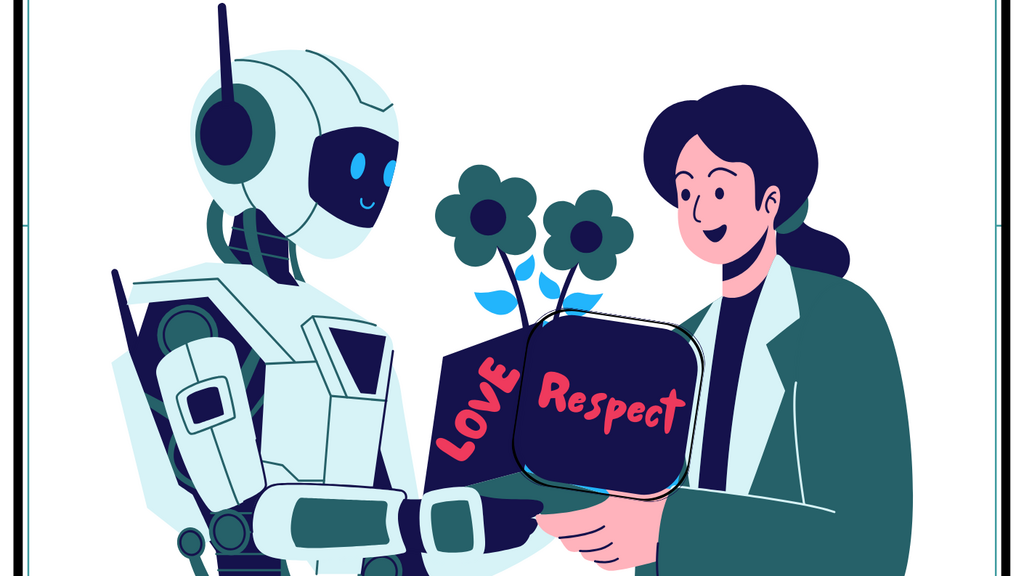
Remember, the goal is not to replace human connection. The goal is to use this tool to be kinder to yourself. It’s about quieting the pain so you can remember your own strength. It’s about moving from just being okay for everyone else, to actually being okay with ourselves.
Echo This Thought - "AI cannot love you, but it can remind you how to love yourself again."
Thank you for reading!
Please feel free to write to me at echoesofme.me@gmail.com.